How to Write Without Distraction
Writing often becomes easier when you deliberately remove the things competing for your attention. These are three methods I use when I need to concentrate on a difficult piece of work.

Most writing problems are not really caused by a lack of ideas. They are caused by interruptions, competing demands and the constant temptation to do something easier.
You sit down intending to finish a chapter, then notice an email. That leads to checking a website, replying to a message or looking up one small detail that sends you down an entirely different path.
Even when those interruptions only last a few minutes, they break the rhythm of the work. Returning to the same level of concentration can take much longer than the interruption itself.
There are plenty of familiar ways to reduce distraction. You can silence your phone, close your browser, block social media or work in timed sessions. All of those can help.
However, I find the most effective approach is often to change the environment or the tool completely. Rather than relying on willpower, I make distraction less available.
Leave the house
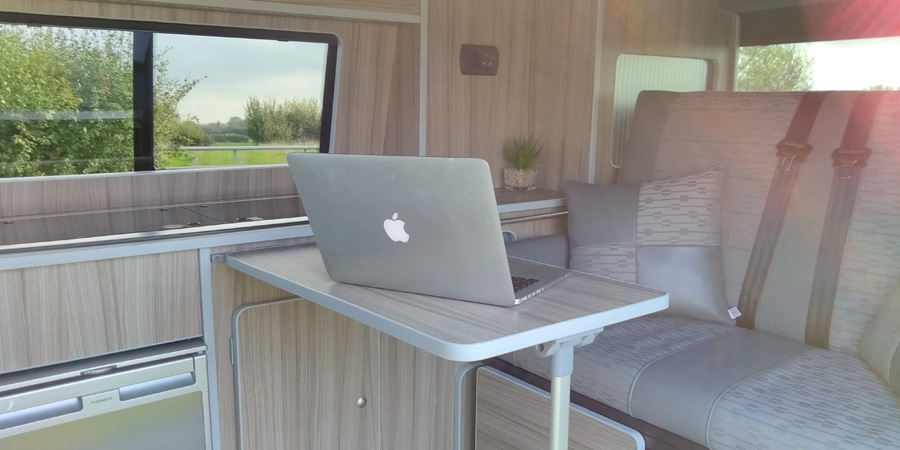
When I know I have a particularly difficult section to write, I sometimes take my laptop out in the camper van.
I find somewhere quiet, park up and work there instead of trying to force the writing at home. The location does not need to be spectacular. It might be a remote car park, somewhere near the coast, beside a field or simply a quiet place where I am unlikely to be interrupted.
The camper van is useful because it gives me a comfortable place to sit, make a drink and work for several hours. However, you do not need a camper van to use the same technique. A car can work perfectly well.
Take your laptop, find somewhere peaceful and move into the passenger seat or sit at a nearby bench. The important part is leaving behind the familiar distractions of home.
At home, there is always something else that could be done. There are jobs around the house, deliveries, conversations, television, food, the dog and all the usual digital interruptions. Even when none of those things actively stop me, their presence can make it harder to settle into a complicated piece of writing.
Going elsewhere creates a clear purpose. I have driven there to write, so writing becomes the only task available.
You do not need Wi-Fi
A poor internet connection is usually treated as an inconvenience. For concentrated writing, it can be an advantage.
Unless the work genuinely requires research, I do not need to be connected while producing a first draft. In fact, having no signal removes the temptation to check messages, browse social media or look up something that can easily wait until later.
If I know I will need reference material, I download it before leaving. I can then work from the documents already on the laptop and make notes of anything that needs checking afterwards.
This separation between writing and research is useful. Constantly switching between the two can turn a focused writing session into several hours of browsing.
Use a reMarkable tablet
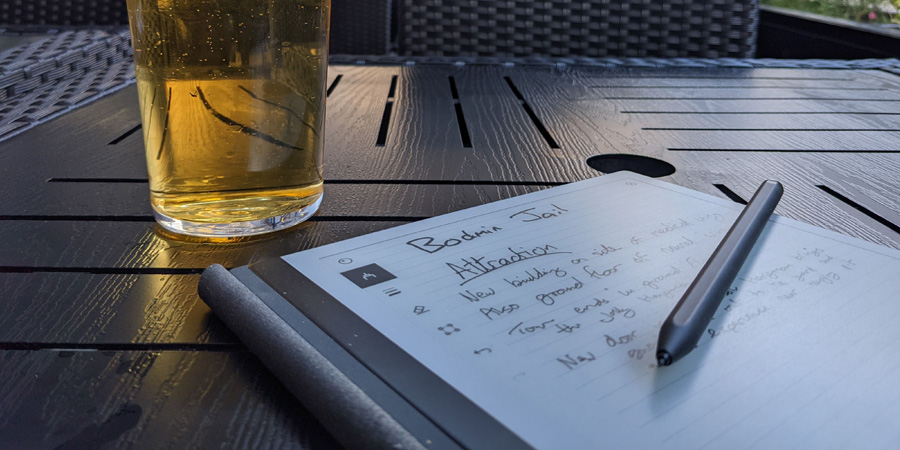
Another tool I use for distraction-free writing is a reMarkable tablet.
It feels much closer to writing on paper than working on a conventional tablet. There are no social media apps, no browser tabs appearing beside the page and no stream of notifications competing for attention.
You open a notebook and write.
I find it particularly useful for planning, brainstorming and drafting sections that are not yet fully formed. Handwriting encourages a slightly different way of thinking. It can feel less formal than opening a blank document and expecting polished prose to appear immediately.
That makes it easier to explore an idea, cross things out, add notes in the margin and work out what I actually want to say.
The advantage over an ordinary paper notebook is that the handwriting can later be converted into digital text using handwriting recognition.
The converted text will usually need tidying, particularly if the handwriting is rushed, but it provides a usable draft that can be copied into the main manuscript and edited on a computer.
This means I can enjoy the concentration of writing by hand without having to type the entire section again afterwards.
Use technology that cannot distract you
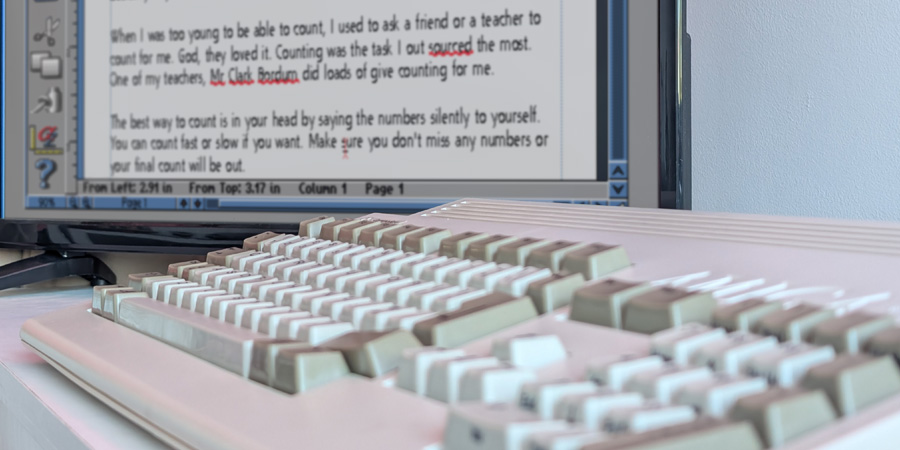
Sometimes the best distraction-free writing tool is an old computer.
I still enjoy writing on the Amiga using software such as Wordworth or Final Writer. These programs provide everything necessary to produce text, but none of the modern distractions surrounding a current computer.
There is no social media sitting in another tab. There are no incoming emails, news alerts or instant messages. The computer does one thing at a time, and while the word processor is open, writing is the obvious thing to do.
The physical experience helps too. Older computers often have substantial keyboards with proper key travel and a satisfying mechanical feel. There is something enjoyable about sitting down at a machine designed primarily for productive work rather than constant connectivity.
It also creates a deliberate separation between drafting and publishing. I can write the raw material on the Amiga, then transfer it to a modern computer later for editing, research, formatting and publication.
Of course, you do not need an Amiga specifically. Any old laptop or computer can serve the same purpose if it can run a simple word processor and remain disconnected from the internet.
A cheap second-hand laptop with Wi-Fi disabled can become a dedicated writing machine. Remove unnecessary programs, turn off notifications and use it only for drafting.
Separate writing from everything else
All three of these approaches work for the same reason. They create a boundary around the writing.
Going out in the camper van separates writing from home. The reMarkable separates writing from apps and websites. The Amiga separates writing from the connected world entirely.
That boundary is often more effective than simply promising yourself you will not become distracted.
Modern computers are designed to do everything. That is useful, but it means the device being used to write a chapter is also capable of playing music, showing videos, checking email, editing photographs, browsing the web and opening dozens of unrelated projects.
A dedicated environment removes some of those choices.
Do the difficult writing first
Distraction is often strongest when the next part of the work feels difficult.
It is easy to concentrate when the words are flowing. The temptation to check email usually appears when a paragraph is not working, a chapter needs restructuring or you are unsure how to explain something.
That is why I save these distraction-free methods for the parts of a project that need the most concentration.
Before starting, I decide exactly what I am going to work on. Rather than setting a vague goal such as writing all afternoon, I might aim to complete one difficult section, solve a structural problem or draft a particular chapter.
A clear task makes it easier to begin and gives the session a definite finishing point.
Prepare before you disconnect
Distraction-free writing works best when you prepare in advance.
Before leaving home or switching devices, gather the material you are likely to need:
- Your current manuscript
- A chapter plan
- Relevant notes
- Downloaded research documents
- Photographs or reference material
- A list of questions the section needs to answer
If something is missing, leave a note in the manuscript rather than immediately returning to the internet.
I might write something such as:
[Check date and add source here.]
The detail can be verified during the editing stage. The important thing is not allowing one missing fact to interrupt the entire writing session.
Accept an imperfect first draft
Another common source of distraction is trying to edit every sentence while writing it.
If you repeatedly stop to improve the same paragraph, the manuscript may never move forward.
A first draft does not need to be elegant. It needs to exist.
This is another reason I enjoy writing on a reMarkable or older computer. Those environments encourage drafting rather than endless adjustment. The more detailed editing can happen later on a modern machine.
Other ways to reduce distraction
You do not need special equipment to create a more focused writing environment.
Simple changes can include:
- Putting your phone in another room
- Turning off email and message notifications
- Writing in full-screen mode
- Closing every program except the word processor
- Using a separate browser profile for research
- Writing at a time when other people are less likely to interrupt
- Setting a specific goal for each session
- Keeping a list of things to check later
The right approach will depend on what normally pulls your attention away.
For some people, the main problem is social media. For others, it is the noise of home, a busy workplace or the temptation to keep researching instead of writing.
Identify the distraction first, then choose an environment that makes it less accessible.
Find the method that changes your mindset
There is nothing magical about writing in a camper van, using a reMarkable or opening Wordworth on an Amiga.
Their value comes from the change in mindset they create.
Each one signals that I am no longer casually using a computer at home. I have entered a space or opened a device specifically to write.
That small ritual makes it easier to begin, particularly when the work ahead is demanding.
Final thoughts
Writing without distraction does not necessarily require greater discipline. Sometimes it simply requires fewer opportunities to become distracted.
Change location, change device or use technology with fewer capabilities. Create a situation in which writing is not merely the most important option, but the easiest one.
For me, that might mean parking the camper van somewhere quiet, writing by hand on the reMarkable or returning to an Amiga word processor with a proper keyboard and no internet connection.
The tools are different, but the purpose is the same: create enough quiet for the words to arrive.
My Distraction-Free Methods
- ✓ Leave the house
- ✓ Find a quiet place
- ✓ Disconnect from the internet
- ✓ Write by hand
- ✓ Use a dedicated writing machine
Related Guides
Need help finishing your book?
If you have an idea, an unfinished manuscript or a collection of material that needs shaping into a book, I can help you develop it into a workable project.
Discuss your bookStruggling to turn your ideas into a finished manuscript?
Whether you need help developing the structure, completing difficult sections or turning interviews and notes into a full book, I would be happy to discuss the most practical next step.
Discuss your book