Writing The Paranormal Investigator With Danny Moss
How six telephone interviews, AI-assisted transcription and careful editorial work became a structured and engaging autobiography.
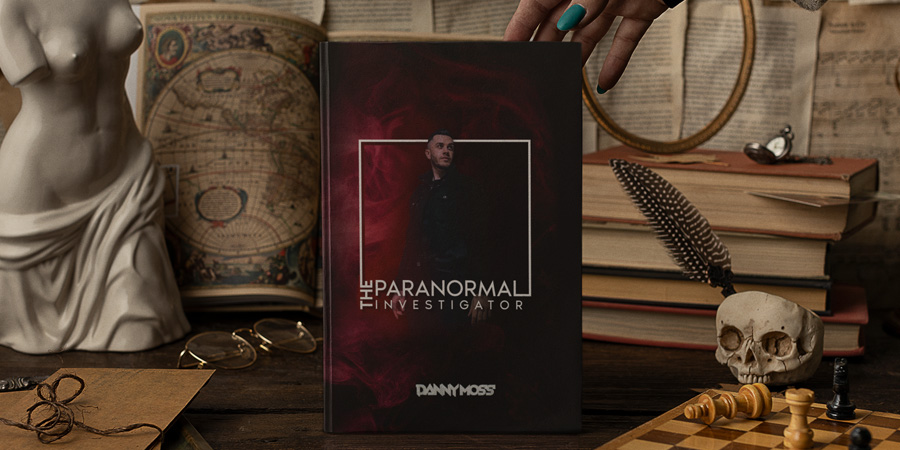
Danny Moss already had the experiences, stories and specialist knowledge needed for a book. What he did not have was the time to sit down and write a complete autobiography from scratch.
Instead, we created The Paranormal Investigator through a series of six detailed telephone interviews. Danny was able to tell his story naturally, while I handled the transcription, structure, writing, research and editing needed to turn those conversations into a finished manuscript.
The result was a book that follows his journey from a teenager with little interest in the paranormal to the founder of The Haunted Hunts, a television presenter and the creator of ambitious long-term paranormal projects. The book also explores the personal pressures, setbacks and difficult experiences that audiences do not normally see. fileciteturn0file0L46-L65
Starting With Conversation Rather Than A Manuscript
Many people have enough knowledge and life experience to fill a book but find the idea of writing tens of thousands of words overwhelming.
Danny did not need to prepare chapters, write notes in a particular format or learn how to structure an autobiography. His main task was simply to talk.
Across six telephone interviews, I guided him through the major stages of his life and career. We discussed his childhood, his early interest in acting, his first unexplained experiences, the creation of The Haunted Hunts, his television work, memorable investigations and the development of his later projects.
Using interviews allowed the material to emerge in a relaxed and natural way. Danny could concentrate on remembering what happened and explaining how he felt, rather than worrying about grammar, pacing or whether each story belonged in the correct chapter.
Planning The Six Interviews
Although the conversations were informal, they still needed direction. Each interview was planned around a particular period or theme so that, taken together, they would cover the full arc of Danny's story.
The subjects included:
- His childhood, football ambitions and early acting career
- His first unexplained experiences and growing paranormal interest
- The creation and expansion of The Haunted Hunts
- His transition into television and online production
- Haunted objects, major investigations and long-term research
- The personal pressures, disputes and future of his work
This gave each call a clear purpose while still leaving room for unexpected memories and useful tangents.
Using AI Transcription To Reduce Time And Cost
One of the reasons the project could be completed efficiently and cost-effectively was the use of AI-assisted transcription.
Each recorded interview was converted into text automatically. This removed the need to spend many additional hours manually typing every word of the conversation before the real writing could begin.
AI transcription did not write the book. It performed the administrative task of turning speech into editable text.
The raw transcripts still contained repetition, incomplete sentences, misheard words, interruptions and stories told out of order. They provided source material, not a finished manuscript.
By reducing the time spent on basic transcription, I could concentrate more of the budget on the work that required editorial judgement: structuring the story, developing the narrative, clarifying details and preserving Danny's voice.
Cleaning And Checking The Transcripts
Automatic transcripts always require careful review.
Names, locations, television titles and specialist terminology can be misheard. Spoken language also contains false starts, repeated phrases and unfinished thoughts that make sense during a conversation but do not work on the page.
I worked through each transcript alongside the recordings, correcting errors and identifying the strongest material.
At this stage, I also marked points that required clarification, further explanation or a follow-up question. This ensured the efficiency of automated transcription did not come at the expense of accuracy.
Reordering The Material
People rarely tell their life story in perfect chronological order.
During one conversation, Danny might mention an event from his teenage years, move forward to a television project and then return to an earlier investigation because it reminded him of something else.
That is completely natural in speech, but it would be confusing in a book.
My role was to separate the material into subjects and periods, then rebuild it in an order that made sense to the reader. Related memories were brought together, repeated versions of the same story were combined and events were moved into their correct place in the wider timeline.
The final contents follow a deliberate progression through Danny's life, career, investigations and future ambitions rather than reflecting the order in which every subject happened to arise during the calls. fileciteturn0file0L27-L40
Turning Speech Into Readable Prose
A transcript records what someone said, but spoken conversation is not the same as written prose.
In speech, people rely on tone, pauses and shared context. They repeat themselves, use vague references and sometimes leave the listener to make connections that would not be obvious to a reader.
I reshaped the spoken material into complete, flowing prose while keeping the tone conversational.
This involved:
- Removing unnecessary repetition and false starts
- Combining fragmented comments into complete passages
- Writing transitions between stories and chapters
- Clarifying timelines and relationships
- Improving pace without stripping away personality
- Checking that each section contributed to the wider narrative
Adding Detail And Explanation
Danny's existing followers might already understand the significance of a particular television programme, haunted location or piece of investigative equipment. A general reader might not.
The interviews therefore needed additional context in places.
I expanded references where necessary, explaining the background to locations, the purpose of paranormal equipment, the history of projects and the importance of particular career moments.
For example, the book does more than say that Danny became interested in haunted locations. It shows how early experiences, historical research and visits to places such as Pendle Hill and Plas Teg gradually shaped his approach to investigation. fileciteturn0file0L208-L243
These additions helped the manuscript work both as a personal story and as an accessible account of a career in the paranormal field.
Building A Narrative Rather Than A Timeline
A successful autobiography needs more than a sequence of dates and events.
The reader needs to understand what changed, what was at stake and why one experience led to the next.
Throughout the manuscript, I developed the narrative threads connecting Danny's early disappointments, his interest in acting, his first paranormal experiences and his eventual decision to create a career in the field.
His football ambitions were ended by injury, acting offered a possible new direction, and repeated unexplained experiences gradually drew him towards paranormal investigation. These events become much more meaningful when presented as connected turning points rather than isolated anecdotes. fileciteturn0file0L161-L178
The same approach was applied to the later chapters, showing how small public events developed into larger projects, television work and long-term investigation.
Preserving Danny's Voice
The purpose of ghostwriting is not to make every author sound like the ghostwriter.
Danny has a direct, informal and energetic way of speaking. It was important that readers who knew him from television, podcasts or public events could still recognise him in the book.
I retained his humour, opinions and conversational rhythm while refining the language enough for it to work as a professional publication.
That meant making the prose clearer without making it stiff, and improving the structure without losing the feeling that Danny was personally telling the reader his story.
Handling Difficult And Personal Material
The book is not limited to ghost hunts and television appearances.
Danny also wanted to discuss the emotional strain, public criticism, professional conflict and personal pressures associated with working in a highly visible and sometimes hostile field.
Those sections needed careful handling. They had to remain honest and personal while fitting the tone and purpose of the wider book.
The introduction establishes this clearly, explaining that the book is intended to show not only Danny Moss the paranormal investigator, but also the human being behind the public persona. fileciteturn0file0L47-L65
Creating A Complete Book From Six Calls
By the end of the interview process, the six conversations had generated enough raw material for a substantial autobiography.
The manuscript was organised into chapters covering the origins of Danny's interest, The Haunted Hunts, his search for evidence, the Grace doll, television work, major projects, conflict within the paranormal community, debunking and his plans for the future.
What began as recorded telephone calls became a coherent 180-page book with a clear beginning, middle and end.
The Result
The Paranormal Investigator was published in December 2024 through Project Weird. fileciteturn0file0L8-L20
The finished book gave Danny a way to tell the full story he had previously shared only in fragments through television appearances, podcasts and interviews.
It also demonstrated a practical and affordable route to publication for someone with a compelling story but limited time to write.
Danny did not have to spend months attempting to produce a manuscript himself. He invested his time in six focused conversations, while I transformed that material into a structured, detailed and readable book.
What The Project Demonstrates
This project shows how efficiently a non-fiction book can be created when the author already holds the story in their memory and experience.
The key stages were:
- Planning a series of focused interviews. Each conversation covered a particular period or theme.
- Using AI-assisted transcription. Automation reduced the time and cost of converting recordings into text.
- Checking and correcting the source material. The transcripts were reviewed for errors, omissions and unclear references.
- Reordering the story. Memories were placed into a logical and engaging sequence.
- Adding context and explanation. Additional detail made the book accessible beyond Danny's existing audience.
- Creating a narrative. Separate experiences were connected into a meaningful personal journey.
- Preserving the author's voice. The final prose remained recognisably Danny's.
A book does not have to begin with someone staring at a blank page. With a clear interview process, efficient transcription and professional editorial support, it can begin with a conversation.
Project
- Book
- The Paranormal Investigator
- Author
- Danny Moss
- Source Material
- Six recorded telephone interviews
- Subject
- Paranormal investigation, television and personal memoir
- Published
- December 2024
- Publisher
- Project Weird
Services Used
Have a story but no time to write it?
I can interview you by phone or in person, turn the recordings into usable text and develop your experiences into a professionally structured book.
Discuss your book